Blog
Hunting Rifle Canada
Aug
ARTICLE STRUCTURE
Choosing the Best Hunting Rifle in Canada: 2026 Field Review & Buyer’s Guide
Introduction
Selecting a dependable hunting rifle in Canada requires a careful blend of mechanical precision, rugged durability, and legal compliance. Canadian terrain presents some of the most challenging field conditions in North America—ranging from damp coastal rainforests in British Columbia to freeze-thaw cycles in the Boreal forest and windswept plains across the Prairies.
For Canadian hunters, a rifle is more than a simple tool; it is a long-term investment that must function flawlessly under sub-zero temperatures while maintaining legal compliance under federal legislation. Navigating non-restricted firearm categories, understanding caliber terminal performance on large game like moose and elk, and picking a setup that carries comfortably over miles of crown land are essential steps before heading into the backcountry.
Legal & Safety Disclaimer: Firearm acquisition and ownership in Canada require a valid Possession and Acquisition Licence (PAL) issued under the federal Firearms Act and administered by the RCMP Canadian Firearms Program. Hunters must verify local game laws, provincial season limits, approved calibers, and magazine capacity limits prior to taking any firearm into the field.
Quick Verdict
Premier Crossover Rifle Pick
- Best For: General big game hunting (moose, elk, deer, black bear) and multi-season field reliability.
- Overall Rating: 9.7 / 10
- Pros: Sub-MOA accuracy guarantee, glass-smooth bolt stroke, lightweight synthetic stock, weather-resistant stainless options, non-restricted legal status.
- Cons: Factory replacement magazines can be expensive; recoil can be snappy in ultralight magnum chamberings without a recoil pad upgrade.
- Bottom Line: A high-quality bolt-action rifle with a stainless finish and synthetic stock represents the pinnacle choice for a hunting rifle in Canada, delivering lifetime reliability across extreme weather environments.
Overview
A modern bolt-action hunting rifle built for Canadian environments prioritizes structural stiffness, weather isolation, and functional simplicity. Unlike range-dedicated target rifles that weigh upwards of 12 pounds, an effective field rifle balances low carry weight with enough barrel mass to stabilize heavy hunting projectiles.
The primary users of these platforms range from backcountry hunters hiking steep mountain ridges to woodland hunters sitting in cold timber stands. Key advantages of top-tier Canadian hunting platforms include free-floated cold hammer-forged barrels, crisp single-stage triggers, corrosion-resistant bolt assemblies, and detachable box magazines.
Whether tracking white-tailed deer through freezing rain or waiting in a ground blind for autumn black bear, a well-matched rifle ensures ethical single-shot placements at realistic hunting distances.
Specifications
The table below details benchmark specifications typical of top-rated bolt-action hunting rifles selected by Canadian outdoorsmen:
| Feature / Specification | Benchmark Standard (e.g., Tikka T3x / Browning X-Bolt Series) |
| Manufacturer Country | Finland / Japan / United States |
| Action Type | Manual Bolt-Action (2 or 3 Lug Configurations) |
| Class Status (Canada) | Non-Restricted (Valid PAL Required) |
| Popular Calibers | .308 Winchester, 6.5 Creedmoor, .30-06 Springfield, .300 Win Mag |
| Barrel Length | 22 inches (560 mm) to 24 inches (610 mm) |
| Barrel Contour | Sporter / Standard Light-Medium |
| Overall Weight (Unloaded) | 6.2 lbs to 7.3 lbs (2.8 kg to 3.3 kg) |
| Stock Material | High-Grade Weatherproof Synthetic or Laminate |
| Metal Coating | Stainless Steel or Matte Blued / Cerakote |
| Magazine System | Detachable Polymer or Flush Steel Box (3 to 5 Round Capacity) |
| Trigger Mechanism | Adjustable Single-Stage (Clean 2.5–4.0 lb Break) |
| Accuracy Standard | Factory 1-MOA Guarantee (with match/premium ammo) |
Key Features
Build Quality and Receiver Design
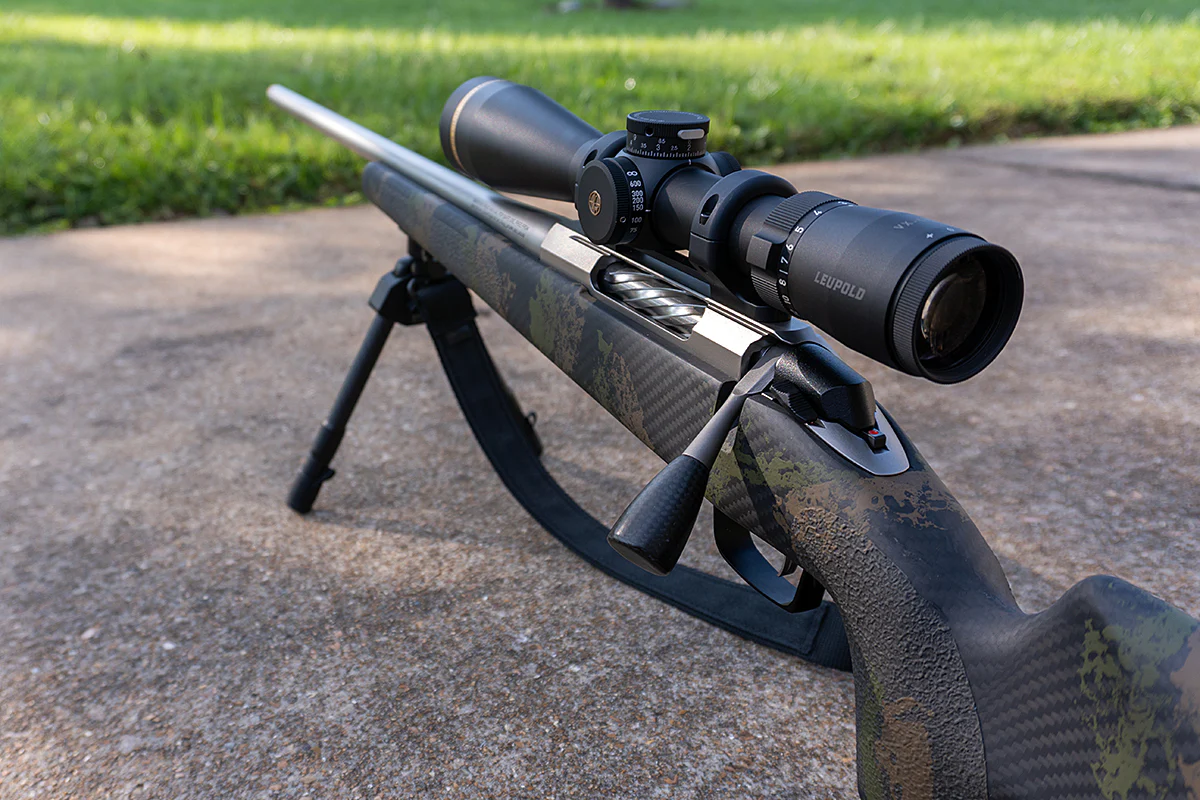
A great hunting rifle starts with a rigid receiver machined to tight tolerances. Stiff receiver construction prevents flexing during lockup, ensuring consistent headspacing and shot placement. Modern bolt designs feature reduced bolt throws (such as 60° to 70° angles), allowing faster cycling speed and generous clearance for mounted optics—even when wearing thick winter gloves.
+-------------------------------------------------------------------+
|                     WEATHERPROOFING SPECTRUM                      |
|                                                                   |
| [Traditional Wood/Blued] --> [Laminate/Blued] --> [Synthetic/SS] |
|   High Moisture Sensitivity     Moderate Protection   Maximum Field  |
|      (Requires Maintenance)     (Stable in Rain)       Durability    |
+-------------------------------------------------------------------+
Cold-Weather Ergonomics and Stock Stability
Synthetic and fiberglass-composite stocks are the gold standard for Canadian field conditions. Unlike natural timber, which can absorb moisture and swell—shifting the point of impact relative to the barrel—synthetic materials remain completely inert regardless of humidity or precipitation. Moulded traction surfaces on the grip and fore-end provide positive control during damp late-autumn hunts.
Crisp Trigger Systems
Clean trigger pull is essential for precise shot execution in cold environments. Premier field rifles incorporate zero-creep, single-stage adjustable triggers set between 2.5 and 3.5 pounds. This allows the hunter to feel a crisp break even when shooting with gloved hands, minimizing movement before the firing pin strikes.
Weather Resistance and Metal Coatings
Exposure to melting snow and salt fog can quickly surface-rust bare carbon steel. Models utilizing stainless steel or advanced ceramic coatings (such as Cerakote) provide an impermeable shield against corrosion. This durability drastically simplifies evening field maintenance back at camp.
Performance
Field Reliability in Sub-Zero Conditions
In Northern provinces and territories, temperatures routinely drop below -20°C during late hunting seasons. High-performance bolt actions are engineered with wide internal clearance channels that resist binding from freezing condensation. When cleaned of heavy factory shipping greases and maintained with dry synthetic lubricants, these rifles cycle smoothly without misfires.
+-------------------------------------------------------------------+
|               SUB-ZERO RIFLE MAINTENANCE PROTOCOL                 |
|                                                                   |
|  1. Strip factory petroleum grease from firing pin assembly.       |
|  2. Apply dry PTFE or graphite-based lubricant.                   |
|  3. Leave rifle in cold outer vestibule to prevent condensation.   |
|  4. Wipe down external metal after returning indoors.            |
+-------------------------------------------------------------------+
Durability and Recoil Management
Carrying a rifle across rough timber, shale slides, and dense bush subjects the barrel and optic to constant physical impacts. Free-floated barrel designs keep the barrel from contacting the fore-end stock wall, protecting point-of-impact alignment. Ergonomic rubber recoil pads absorb energy effectively, allowing comfortable sighting-in sessions at the range.
Available Variants & Caliber Recommendations
Matching the rifle’s chambering to your target game species is critical for ethical harvesting across Canada:
- .308 Winchester: The ultimate versatile caliber in Canada. Provides exceptional terminal power on white-tailed deer, black bear, and moose at moderate ranges. Ammunition is widely available in remote Northern supply shops.
- 6.5 Creedmoor: Excellent for long-range open-country hunting on the Prairies or mountain valleys. Offers low recoil, high velocity retention, and flat trajectories suitable for mule deer and pronghorn.
- .30-06 Springfield: A time-tested Canadian classic with heavy projectile capability (up to 200 grains), ideal for big bull moose and elk in dense bush.
- .300 Winchester Magnum: Preferred by mountain hunters needing extended effective range and maximum kinetic energy transfer on large game animals across long valleys.
Pros and Cons
Pros
- Non-Restricted Legal Convenience: Easy transport across provincial borders for hunting trips and target practice on crown land.
- All-Weather Resilience: Synthetic stocks and stainless/Cerakote metal finishes stand up to harsh winter elements.
- Sub-MOA Precision: Modern barrel forging ensures tight groupings out of the box with quality hunting ammunition.
- Manageable Field Weight: Balanced profile allows effortless carrying during full-day tracking hikes.
- Optic Mounting Versatility: Pre-drilled receivers or factory rails accommodate a wide variety of optic rings.
Cons
- Recoil Management: Ultralight hunting models generate sharper felt recoil in magnum calibers compared to heavy target rifles.
- Magazine Capacities: Most non-restricted hunting rifles utilize 3-to-5-round flush magazines, which are tailored for field carry rather than rapid target sequences.
Competitor Comparison
The table below compares top bolt-action platforms widely used as primary hunting rifles across Canada:
| Model Platform | Bare Weight | Action Throw | Stock Material | Standout Feature | Price Tier |
| Tikka T3x Lite Stainless | 6.4 lbs | 70° (2-Lug) | Modular Synthetic | Exceptionally smooth stroke & sub-MOA precision | Mid-to-High |
| Browning X-Bolt II | 6.5 lbs | 60° (3-Lug) | Composite | Feather Trigger & fast short-throw bolt | Mid-to-High |
| Savage 110 Weathered | 7.2 lbs | 90° (2-Lug) | AccuStock Synthetic | User-adjustable AccuTrigger & length of pull | Mid-Range |
| Ruger American Gen II | 6.5 lbs | 70° (3-Lug) | Ergonomic Synthetic | Budget-friendly reliability with splash of Cerakote | Entry-to-Mid |
Platform Selection Guide
- Choose the Tikka T3x Lite for top-tier action smoothness, lightweight packing, and reliable Finnish craftsmanship.
- Choose the Browning X-Bolt II if you prefer a short 60-degree bolt lift for maximum optic clearance and fast follow-up shots.
- Choose the Savage 110 if user-customizable stock dimensions and adjustable trigger pull are your top priorities.
- Choose the Ruger American Gen II for a value-packed, durable workhorse rifle that leaves extra budget for high-quality optics.
Buying Guide
Identifying Your Hunting Profile
To narrow down your purchase, consider your primary hunting style:
- The Backcountry Trekker: If your hunts involve logging 15+ kilometers a day across mountain trails, prioritize lightweight platforms (under 6.5 lbs bare) in flat-shooting calibers like 6.5 Creedmoor or 7mm Remington Magnum.
- The Timber & Stand Hunter: If you hunt from blinds or track through thick bush for big moose, a slightly heavier rifle in .308 Win or .30-06 Springfield with a 20-to-22-inch barrel offers quick handling and solid terminal energy.
Essential Accessories & Maintenance Tips
- Optics & Rings: Pair your rifle with a waterproof, fog-proof optic (e.g., 3-9x40mm or 4-12x44mm). Quality steel mounting rings keep your zero locked despite rough transport in ATVs or pickup trucks.
- Cold-Weather Lubrication: Replace heavy liquid lubricants with dry PTFE sprays before late-season winter hunts to prevent action slowdown.
- Post-Hunt Drying: Never store a damp rifle inside a sealed fabric gun case. Wipe down metal surfaces with an oiled cloth and let the firearm dry at room temperature in an open rack.
Frequently Asked Questions
What license is needed to buy a hunting rifle in Canada?
You must possess a valid Possession and Acquisition Licence (PAL) for non-restricted firearms issued by the RCMP Canadian Firearms Program to legally purchase, transport, and own a hunting rifle in Canada.
Are bolt-action hunting rifles subject to magazine limits in Canada?
Generally, non-restricted bolt-action centerfire rifles do not carry the rigid 5-round magazine limit imposed on semi-automatic centerfire long guns. However, most factory hunting rifles come equipped with 3-to-5-round magazines to remain lightweight and flush-fitting.
What is the best all-around caliber for moose and deer in Canada?
The .308 Winchester and .30-06 Springfield remain the top all-around caliber choices. Both offer ample kinetic energy to ethically harvest moose and elk while remaining manageable for deer, supported by wide ammunition availability across Canada.
Is stainless steel better than blued steel for Canadian hunting?
Yes. Stainless steel offers far superior resistance to rust and corrosion caused by rain, snow, and humidity. Blued steel is traditional and cost-effective, but requires vigilant cleaning and oiling after exposure to wet weather.
Can I target shoot with my hunting rifle on Canadian Crown land?
Yes, valid PAL holders may target shoot with non-restricted rifles on public Crown land where local municipality bylaws and provincial safety regulations permit discharge of firearms. Always clean up target trash and spent brass.
Should I choose a wood or synthetic stock for Canadian winters?
Synthetic stocks are generally superior for severe Canadian winters because they do not absorb moisture, swell, or crack in freeze-thaw cycles, preserving your rifle’s zero.
What optical magnification is best for big game hunting in Canada?
A variable optic in the range of 3-9x40mm or 2.5-10x42mm covers almost all Canadian hunting scenarios, providing a wide field of view in thick timber alongside enough magnification for longer shots across open fields.
How often should I clean my hunting rifle during the season?
Perform a quick exterior wipe-down with a silicone or oil cloth after every wet outing. Full bore cleaning should take place after range practice sessions, prior to long-term storage, or whenever moisture gets inside the action.
