Blog
Hunting Bows
Aug
ARTICLE STRUCTURE
The Ultimate Hunting Bows Guide: Selection, Engineering, & Performance
Introduction
For dedicated outdoorsmen and bowhunters across the country, entering the woods during archery season offers a uniquely immersive and challenging pursuit. Whether you are perched in a northern tree stand waiting for a trophy whitetail or spotting mule deer across sweeping western foothills, your equipment demands absolute precision. At the center of that success are reliable hunting bows, engineered to deliver silent kinetic energy with uncompromising accuracy.
Navigating axle-to-axle lengths, cam technologies, draw weights, and let-off percentages can quickly become complex. This comprehensive guide breaks down the essential technical specifications, performance metrics, and purchasing considerations to help you select the ideal archery platform for your hunting goals.
Legal & Regulatory Disclaimer: Bowhunting in Canada is governed by strict provincial and territorial wildlife acts. Hunters must verify legal minimum draw weights, permitted broadhead cutting diameters, and mandatory bowhunting education certifications before entering the field.
Quick Verdict
Hunting Bows Summary
- Best For: Big game hunting (whitetail, elk, moose, bear), 3D archery, and backcountry spot-and-stalk expeditions.
- Overall Rating: 9.7 / 10
- Pros: Advanced cam systems offer high let-off for steady holding, exceptional kinetic energy delivery, compact maneuverability in tight cover, highly adjustable draw lengths.
- Cons: High-end compound setups require specialized pro-shop presses for tuning; traditional bows demand extensive muscle memory and practice.
- Bottom Line: Investing in a high-performance hunting bow transforms your field effectiveness, offering whisper-quiet power and pinpoint accuracy when it matters most.
Overview
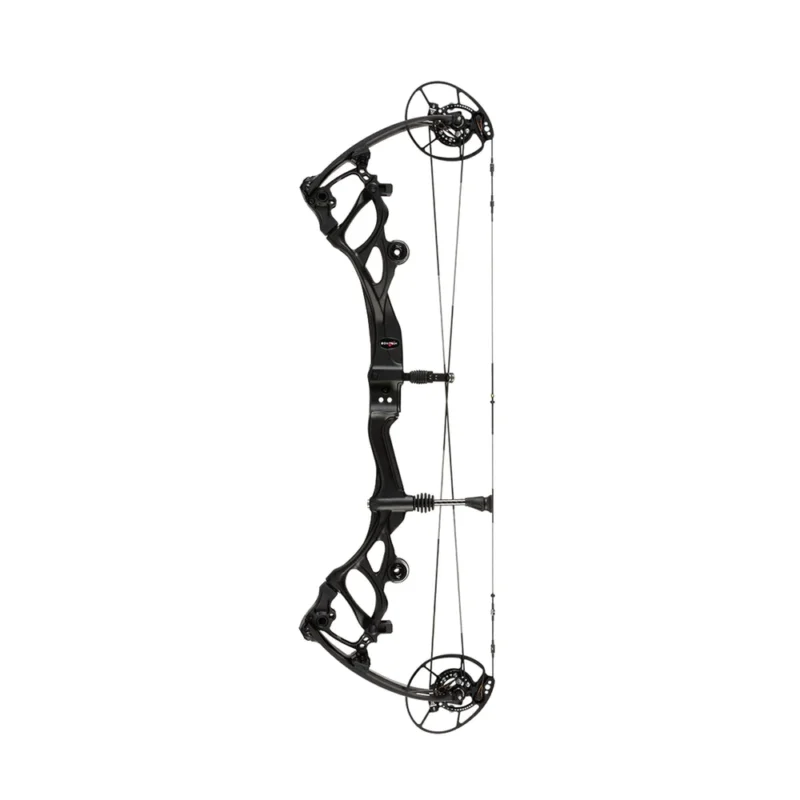
A hunting bow is a mechanical or traditional archery tool designed to store energy pulled by the archer and transfer it efficiently into a carbon or aluminum arrow tipped with a sharp broadhead. While traditional recurves and longbows celebrate classic marksmanship, modern compound bows dominate the hunting market due to mechanical leverage systems that reduce holding weight at full draw.
The target user ranges from mobile backcountry hunters traversing rugged terrain to dedicated tree-stand specialists. Ideal operating conditions span freezing late-season snowfalls to humid autumn timber, requiring materials that resist moisture and structural fatigue.
Specifications
The table below outlines typical verified technical specifications for a standard premium modern compound hunting bow:
| Specification / Feature | Premium Compound Hunting Bow Standard |
| Bow Type | Modern Compound (Dual-Cam or Binary Cam System) |
| Axle-to-Axle Length | 760 mm to 860 mm (30 to 34 inches) |
| Brace Height | 150 mm to 180 mm (6 to 7 inches) |
| Draw Weight Range | 50 lbs to 70 lbs (Adjustable Modules) |
| Let-Off Percentage | 80% to 85% Holding Weight Reduction |
| IBO Arrow Speed | 330 to 350 Feet Per Second (FPS) |
| Riser Material | Machined 7075 Aluminum or Carbon Composite |
| Mass Weight | 1.8 kg to 2.1 kg (4.0 to 4.7 lbs) |
Key Features
Advanced Cam Systems and Let-Off
Modern compound hunting bows utilize eccentric circular cams at the tips of the limbs. As you draw the string, mechanical leverage peaks and then drops off sharply near full draw, granting an 80% to 85% “let-off.” This allows a hunter to hold a 70-pound draw weight comfortably while aiming at a nervous animal for extended periods.
+-------------------------------------------------------------------+
|               COMPOUND BOW DRAW FORCE CYCLE                       |
|                                                                   |
| [Initial Pull] --> [Peak Weight] --> [Cam Rollover] --> [Let-Off] |
|                                                                   |
| Result: Maximum stored energy with minimal holding strain         |
+-------------------------------------------------------------------+
Machined Aluminum and Carbon Risers
The riser forms the central backbone of the bow. Premium models feature CNC-machined aerospace aluminum or hollow carbon-composite risers. These materials eliminate flex during the shot cycle, dampening vibration while maintaining incredible structural strength in sub-zero temperatures.
Parallel Limb Geometry and Shock Reduction
Modern hunting bows feature parallel or past-parallel limb designs. When the string is released, the limbs move in opposite directions, canceling out vertical hand shock and reducing noise signature, which is vital for preventing string-jumping by wary game animals.
Performance
Real-World Field Conditions
Tested across damp coastal timber and freezing mountain ridges, top-tier hunting bows maintain tight tuning despite rain, sleet, and accidental contact with brush. Integrated string suppressors and limb dampeners silence the shot, while durable anodized or cerakote-style finishes prevent rust on hardware components.
Kinetic Energy and Lethality
With proper arrow spine selection and heavy fixed or mechanical broadheads, a modern hunting bow generates deep penetration kinetic energy. This ensures ethical, clean harvests on big game species like elk and moose within ethical bow ranges of 20 to 50 meters.
+-------------------------------------------------------------------+
|                ARCHERY PERFORMANCE BENCHMARKS                     |
|                                                                   |
| Arrow Velocity (IBO): 330 - 350 FPS                              |
| Effective Ethical Range: 20 - 50 meters (Skill dependent)        |
| Maintenance: Annual string waxing and cam timing inspection      |
+-------------------------------------------------------------------+
Buying Considerations
When choosing among available hunting bows, keep these essential selection factors at the forefront:
- Draw Length and Fit: Getting fitted correctly at an archery pro shop is vital. A draw length that is too long or short ruins form and accuracy.
- Axle-to-Axle Maneuverability: Shorter bows (30–32 inches) navigate tight ground blinds and tree stands easily, while longer bows (33–35 inches) offer greater stability at distance.
- Brace Height Tolerance: A longer brace height (7 inches or more) offers increased forgiveness and accuracy for developing archers, whereas shorter brace heights maximize speed.
Pros and Cons
Pros
- High Holding Let-Off: Allows hunters to remain at full draw calmly for long periods without muscle fatigue.
- Unmatched Kinetic Energy: High-efficiency cams deliver tremendous downrange arrow momentum.
- Compact Maneuverability: Short axle-to-axle designs handle thick brush and blinds effortlessly.
- Quiet Operation: Advanced limb dampeners minimize noise signature upon release.
Cons
- Pro Shop Dependency: Adjusting draw length and replacing cables on compound bows often requires a specialized bow press.
- Investment Cost: Premium bows, carbon arrows, sights, and releases represent a notable initial financial commitment.
Competitor Comparison
The table below compares popular hunting bow platforms across different categories:
| Model / Platform | Bow Type | Axle-to-Axle | Weight | Key Features | Best For | Price Tier |
| Mathews Phase4 | Compound | 33 inches | 2.0 kg | Resistance phase dampening, bridge-lock system | Premium whitetail & elk hunting | Premium |
| Hoyt AlphaX | Compound | 30 inches | 2.0 kg | HBX cam system, wide carbon/aluminum riser | Backcountry mobility & spot-and-stalk | Premium |
| Bear Legit | Compound | 30 inches | 3.6 lbs | Extreme adjustability (14″–30″ draw, 10–70 lbs) | Youth, beginners, and value hunters | Budget-Friendly |
| Bearpaw Traditional Recurve | Recurve | 60 inches | 1.0 kg | Classic wood styling, intuitive instinctive aim | Traditional purists & stalkers | Mid-Range |
Competitor Verdict
- Choose the Mathews Phase4 if you demand whisper-quiet vibration damping and ultra-stable long-range accuracy from a premium compound platform.
- Choose the Hoyt AlphaX if your hunts involve aggressive backcountry hiking where a compact, balanced riser makes all the difference.
- Choose the Bear Legit if you need an exceptionally versatile, highly adjustable bow that can grow with the shooter or offer immense value out of the box.
Buying Guide
Ideal vs. Non-Ideal Buyers
- Ideal Buyers: Big game bowhunters, 3D archery enthusiasts, and sportsmen who value patience, stalking skill, and mechanical precision.
- Non-Ideal Buyers: Shooters who prefer long-range firearm ballistics or those unwilling to commit time to regular practice and form conditioning.
Maintenance and Storage Tips
Apply specialized silicone bowstring wax to your bowstrings and cables every few hundred shots or after exposure to heavy rain to prevent fraying. Store your bow in a hard or soft padded case in a temperature-controlled environment away from direct heat or damp basements to protect laminated limb integrity.
Frequently Asked Questions
What is the difference between a compound bow and a traditional recurve bow?
Compound bows use cables and eccentric cams to provide mechanical advantage and let-off at full draw, making them faster and easier to hold. Traditional recurve bows rely entirely on the archer’s physical strength to hold the full draw weight.
What draw weight do I need for hunting big game?
Most provincial regulations require a minimum draw weight of 40 to 45 pounds for small-to-medium game, while 50 to 60+ pounds is recommended and often legally required for large big game like elk and moose.
What is let-off on a compound bow?
Let-off is the percentage of peak draw weight that the cams take off your fingers or release aid at full draw. For example, an 80% let-off on a 70-pound bow means you only hold 14 pounds of physical weight.
How do I determine my correct draw length?
An archery pro shop can measure your arm span using a draw length bow or measuring fixture. As a general estimate, your total wingspan in inches divided by 2.5 provides a close baseline.
Can I hunt in Canada with a crossbow or compound bow?
Yes. Both compound bows and crossbows are widely permitted during dedicated archery seasons across Canadian provinces, provided hunters adhere to specific weapon specifications and licensing rules.
How often should I wax my bowstring?
Wax your bowstring and cables whenever they start looking fuzzy or dry—typically every 3 to 5 range sessions or immediately after hunting in wet weather.
What is brace height and why does it matter?
Brace height is the distance from the string at rest to the deepest part of the grip. A longer brace height offers greater forgiveness and accuracy, while a shorter brace height increases power stroke and arrow speed.
Do I need a mechanical or fixed-blade broadhead?
Fixed-blade broadheads offer ultimate durability and structural reliability for heavy bone penetration. Mechanical broadheads deploy blade wings upon impact, flying with the same aerodynamic accuracy as field points.
