Aug
ARTICLE STRUCTURE
The Ultimate Compound Bow Guide: Selection, Specs, & Performance Reviews
Introduction
For modern big-game hunters and target archers, achieving pinpoint accuracy requires equipment that blends mechanical innovation with ergonomic comfort. At the center of modern archery is the compound bow, a sophisticated firearm alternative that utilizes cables and eccentric cams to store maximum energy while minimizing holding strain at full draw. Whether you are pursuing whitetail deer from a dense forest tree stand or stalking big game across open backcountry, selecting the right bow dictates your success in the field.
Navigating the vast array of axle-to-axle lengths, let-off percentages, and adjustable draw modules can feel overwhelming. This comprehensive guide explores what you need to know about compound bow mechanics, specifications, performance factors, and purchasing considerations to elevate your archery setup.
Legal & Regulatory Disclaimer: Archery hunting regulations vary significantly across provinces and states. Hunters must verify local wildlife management laws regarding minimum draw weights, permitted broadhead designs, and mandatory hunter education or bowhunting certification requirements before heading into the field.
Quick Verdict
Compound Bow Summary
- Best For: Big game bowhunting, 3D archery competitions, target shooting, and backyard practice.
- Overall Rating: 9.6 / 10
- Pros: Exceptional kinetic energy delivery, mechanical let-off reduces strain at full draw, highly adjustable draw weight and length, incredible arrow speeds.
- Cons: Requires specialized pro shop equipment (bow press) for major cable and string replacements; heavier than traditional recurve bows.
- Bottom Line: The modern compound bow is the undisputed gold standard for ethical, high-performance bowhunting, offering unmatched speed, accuracy, and customizability.
Overview
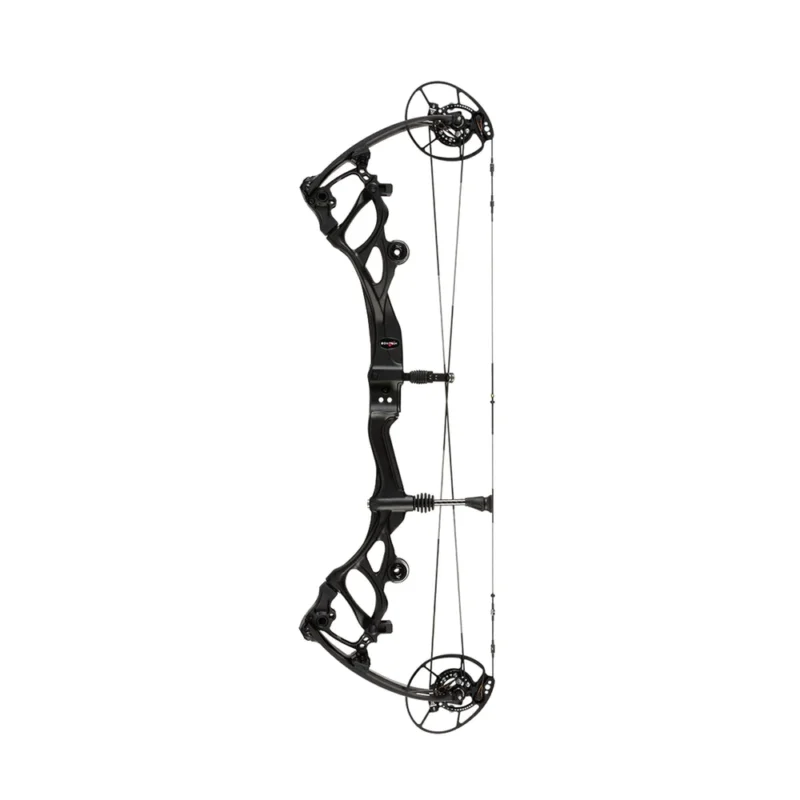
A compound bow is an engineered archery system that uses levers, pulleys, and cables to bend stiff limbs. Unlike traditional longbows or recurves—where holding weight increases steadily until release—a compound bow’s cam system “lets off” weight once past peak draw, often reducing the holding weight by 80% to 90%.
The target user ranges from beginner archers stepping into local 3D leagues to seasoned backcountry hunters requiring flat-shooting trajectories and maximum kinetic energy for ethical harvests. Ideal conditions span from crisp autumn mornings in deep timber to regulated indoor target ranges.
Specifications
The table below outlines typical verified technical specifications for a high-performance hunting compound bow:
| Specification / Feature | Premium Hunting Compound Bow Standard |
| Action Type | Dual-Cam / Hybrid-Cam Mechanical Pulley System |
| Axle-to-Axle Length | 760 mm to 860 mm (30 to 34 inches) |
| Brace Height | 150 mm to 180 mm (6.0 to 7.0 inches) |
| Draw Weight Range | 40 lbs to 70 lbs (Adjustable) |
| Draw Length Range | 26 inches to 30 inches (Modular Adjustment) |
| Let-Off Percentage | 80% to 85% Standard |
| IBO Speed Rating | 330 to 350 Feet Per Second (FPS) |
| Mass Weight | 1.8 kg to 2.1 kg (4.0 to 4.6 lbs) |
| Riser Material | Machined Aluminum Alloy or Carbon Composite |
Key Features
Advanced Cam Systems
The heart of any compound bow is its cam system. Modern bows utilize binary, hybrid, or single cams to synchronize limb movement. These cams store immense energy during the draw cycle and release it smoothly upon triggering, translating into flat trajectories and devastating kinetic energy transfer downrange.
+-------------------------------------------------------------------+
|               COMPOUND BOW ENERGY TRANSFER CYCLE                  |
|                                                                   |
| [Peak Draw Weight] --> [Cam Rollover] --> [80% Let-Off Holding]   |
|                                                                   |
| Result: Maximum stored potential energy with minimal muscle fatigue|
+-------------------------------------------------------------------+
Riser Design and Vibration Dampening
Modern risers are CNC-machined from high-grade aluminum or carbon fiber. Manufacturers integrate strategic cutouts and rubber dampeners to absorb hand shock and eliminate post-shot vibration, resulting in a dead-in-the-hand feel that improves overall shooting comfort and accuracy.
Adjustable Modularity
Gone are the days of purchasing a bow tied to a single draw length. Most modern compound bows feature rotating or interchangeable modules that allow archers to fine-tune draw length and draw weight across a broad spectrum without requiring a bow press for basic adjustments.
Performance
Real-World Field Conditions
Tested across wet timber, freezing late-season temperatures, and dusty 3D ranges, premium compound bows maintain structural integrity thanks to weather-resistant string materials (like BCY fibers) and durable anodized or cerakote riser finishes. Regular waxing keeps bowstrings conditioned against moisture penetration.
Speed and Kinetic Energy
High-performance compound bows push heavy carbon arrows at speeds exceeding 330 FPS. This velocity, combined with proper arrow spine selection, delivers the momentum and kinetic energy required to punch through thick hide and bone cleanly during big game hunts.
+-------------------------------------------------------------------+
|                ARCHERY PERFORMANCE BENCHMARKS                     |
|                                                                   |
| Arrow Velocity: 320 - 350 FPS (Manufacturer IBO standard)        |
| Effective Hunting Range: Up to 50 meters (Skill dependent)       |
| Maintenance: String waxing every 100 shots; annual pro shop tune  |
+-------------------------------------------------------------------+
Buying Considerations
When selecting a compound bow for your specific needs, evaluating core structural and performance metrics ensures long-term satisfaction:
- Axle-to-Axle (ATA) Length: Shorter bows (30–32 inches) maneuver easily in tight ground blinds or tree stands. Longer bows (33–35+ inches) offer enhanced stability and a more forgiving string angle for target shooting.
- Brace Height: A longer brace height (7+ inches) offers greater forgiveness for form errors, while a shorter brace height increases power stroke and arrow speed.
- Draw Weight Selection: Ensure you select a peak weight you can draw smoothly without “sky-drawing” (pointing the bow skyward to pull the weight back), which compromises safety and form.
Pros and Cons
Pros
- High Kinetic Energy: Delivers lethal penetration power for big game hunting.
- Holding Let-Off: Allows archers to hold at full draw comfortably for extended periods while waiting for an animal to step clear.
- Unmatched Accuracy: Tight tolerances and mechanical consistency produce incredible group tightness at distance.
- Extensive Customization: Easily paired with sights, drop-away rests, stabilizers, and quivers.
Cons
- Equipment Dependence: Requires pro shop visits or a personal bow press for peep sight installations, string changes, and major tuning.
- Learning Curve: Proper form, anchor points, and release aid usage require consistent practice to master.
Competitor Comparison
The table below compares popular compound bow classes and design philosophies:
| Bow Style / Category | Typical Axle-to-Axle | Speed (IBO) | Best For | Price Tier |
| Compact Hunting Bow | 30 to 32 inches | 335–350 FPS | Tree stands, blind hunting, tight bush | Mid to High |
| All-Around Hybrid Bow | 33 to 35 inches | 325–340 FPS | General hunting & 3D target archery | Mid-Range |
| Target / Long ATA Bow | 36 to 40+ inches | 315–330 FPS | Competitive target archery & spot-and-stalk | Premium |
| Youth / Adjustable Bow | 25 to 30 inches | 250–300 FPS | Growing archers & entry-level training | Budget-Friendly |
Competitor Verdict
- Choose a Compact Hunting Bow if your hunting style revolves around cramped tree stands, ground blinds, or thick brush where maneuverability is paramount.
- Choose an All-Around Hybrid Bow if you want a balanced platform that performs equally well on a backcountry elk hunt and a summer 3D archery course.
- Choose a Target Bow if your primary focus is competitive accuracy, stability, and tight scoring rings at long distances.
Buying Guide
Ideal vs. Non-Ideal Buyers
- Ideal Buyers: Hunters seeking ethical, high-velocity big game harvesting tools, and target archers looking for precision modular performance.
- Non-Ideal Buyers: Individuals seeking ultra-low-maintenance traditional gear or those unable to visit an archery pro shop for professional setup and paper-tuning.
Proper Maintenance and Storage
Store your compound bow in a padded hard or soft case away from extreme heat and moisture. Never “dry fire” a compound bow (releasing the string without an arrow loaded), as the immense stored energy will shatter limbs, snap cables, and potentially cause severe personal injury.
Frequently Asked Questions
What is let-off on a compound bow?
Let-off refers to the reduction in draw weight at the very end of the draw cycle. An 80% let-off means that on a 70-lb bow, you only hold 14 lbs of physical weight when fully drawn.
Can I adjust the draw weight myself?
Yes, most compound bows feature limb bolts that allow you to adjust the peak draw weight within a 10-to-15 pound range using an allen wrench. Never back out limb bolts beyond the manufacturer’s recommended limit.
What is the difference between single-cam and dual-cam bows?
Single-cam bows use one round cam and one idler wheel, offering smooth draws and minimal timing maintenance. Dual-cam (or hybrid-cam) systems use two synchronized cams to maximize speed and energy storage.
How do I determine my correct draw length?
A common formula is to measure your wingspan in inches from fingertip to fingertip and divide by 2.5. However, getting measured professionally at an archery pro shop ensures absolute accuracy.
Can I dry fire a compound bow?
No, never dry fire a compound bow. Without an arrow to absorb the energy, the shock transfers directly back into the cams, limbs, and risers, frequently destroying the bow.
How often should I wax my bowstring?
Apply high-quality bowstring wax every 100 to 200 shots, or whenever the string begins to look fuzzy or dry, rubbing it in with your fingers until friction melts it into the fibers.
What brace height should a beginner choose?
Beginners benefit from a brace height of 6.5 to 7.0 inches or greater, as a longer brace height is more forgiving of minor form flaws and torque.
Where should I store my compound bow?
Store your bow in a climate-controlled environment inside a protective case, avoiding hot attics, damp basements, or direct sunlight in vehicle trunks.
